








Technical Information by Application
Emulsion Stabilizer Applications
Having both hydrophobic and hydrophilic groups within its molecules, GOHSENOL™ performs excellently as an emulsifier for synthetic resin emulsions. In particular, it has the following advantages over other surfactants on the market:
- 1.Excellent protective colloid ability for vinyl acetate monomer
- 2.Resilience of dried membrane
- 3.Reliable adhesion to hydrophilic materials such as cellulose
Therefore, GOHSENOL™ is preferred as a polymerization emulsifier for vinyl acetate emulsions used for bonding wood and paper.
Generally, the emulsion prepared by using GOHSENOL™ as an emulsifier has the following features:
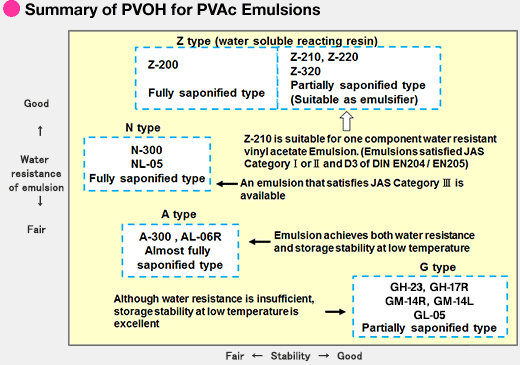
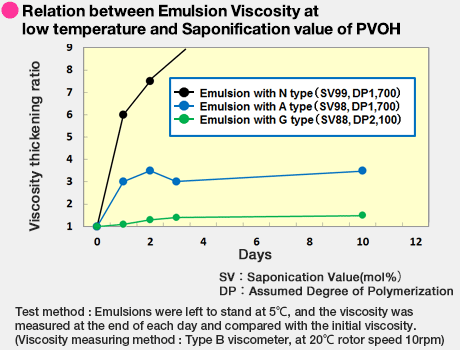
- 1.G Type (partially saponified PVOH): Viscosity stability, high thixotropy, and high viscosity
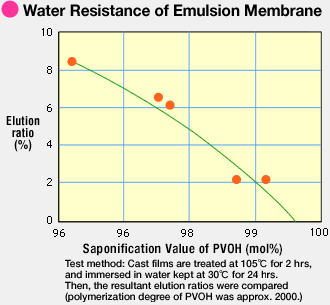
- 2.N Type (fully saponified PVOH): Water resistance (emulsion film) and low thixotropy
- 3.A Type (almost fully saponified PVOH): Characteristics between those of the above two types (both water resistance and viscosity stability)